Posted on: Friday, 27th March, 2026
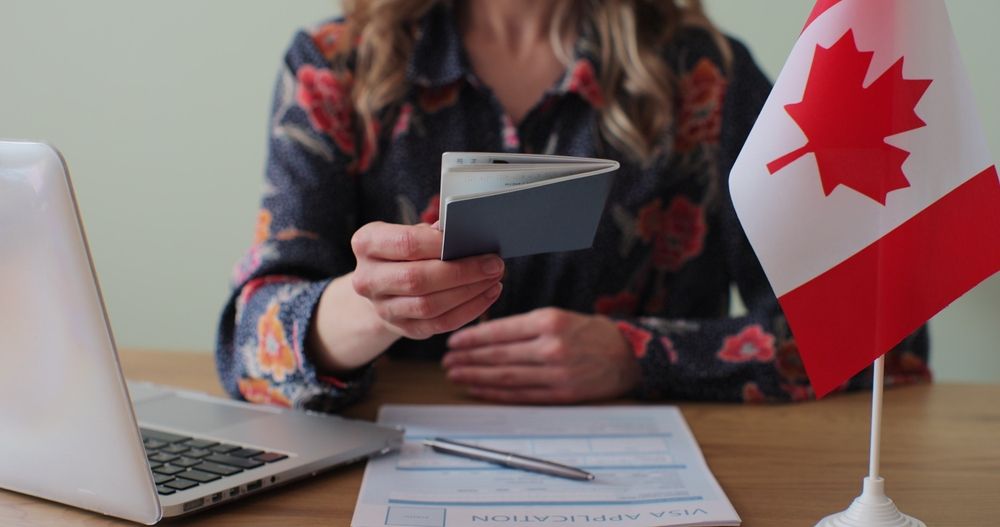
Every year, thousands of Nepali students land in Toronto, Vancouver, and Calgary — not as tourists, but as degree students building careers in one of the world's most welcoming countries. If you're reading this from Kathmandu, Pokhara, or Biratnagar, chances are you've already thought about joining them.
But here's what nobody tells you upfront: studying in Canada from Nepal involves far more than picking a university and filling out forms. Between the Provincial Attestation Letter (PAL), proof of funds, language scores, and a study permit process that changed significantly in 2024–2026, there's a lot to get right the first time.
This guide covers everything — eligibility, documents, a step-by-step process, real costs in NPR, top universities, scholarships, and what happens after you graduate. Whether you're applying for a bachelor's or a master's, this is the only resource you need.
Canada has consistently ranked among the top three study destinations for Nepali students, and for good reason.
World-class universities. Institutions like the University of Toronto, UBC, McGill, and McMaster are globally ranked and recognised by employers everywhere. A Canadian degree carries real weight.
Post-study work rights. The Post-Graduation Work Permit (PGWP) lets you work in Canada for up to three years after graduation — a major advantage over countries like the UK or Australia.
A genuine pathway to PR. Canada's Express Entry system gives international graduates a direct route to Permanent Residency. This isn't just an education destination — it's a long-term life option.
A welcoming, multicultural society. Canada is one of the most diverse countries in the world, with a well-established Nepali diaspora in cities like Toronto, Calgary, and Winnipeg.
Rising visa approval rates. Canada's student visa approval rate for Nepali applicants climbed to around 57% in 2025 and is trending upward into 2026 — the highest it has been in years.
Before anything else, confirm you meet the baseline eligibility. Requirements differ slightly between bachelor's and master's levels.
| Criteria | Bachelor's | Master's |
|---|---|---|
| Academic | +2 / A-Levels (min 60%) | Bachelor's degree (min GPA 2.8–3.0) |
| IELTS (min) | Overall 6.0, no band below 5.5 | Overall 6.5, no band below 6.0 |
| PTE (min) | PTE Academic 58+ | PTE Academic 65+ |
| Financial Proof | 1st year tuition + CAD 22,895 living | Same — varies by province |
| Study Permit Fee | CAD 150 | CAD 150 |
| Biometrics Fee | CAD 85 | CAD 85 |
| Processing Time | 8–12 weeks | 8–12 weeks |
ℹ Academic requirements vary by university and programme. Always verify requirements on the official DLI website before applying.
[IMAGE: Clean 10-step flowchart graphic — from university selection to arriving in Canada, colour-coded steps | Alt: Canada study permit process Nepal step by step 2026]
Start by identifying your field of study and level. Only Designated Learning Institutions (DLIs) can issue a valid Letter of Acceptance for a study permit. Popular DLIs among Nepali students include the University of Toronto, University of British Columbia, Toronto Metropolitan University, Humber College, and Seneca Polytechnic.
ℹ If you plan to work in Canada after graduation, verify that your programme's CIP code appears on the PGWP-eligible list at the time of your application. As of mid-2025, there are 920 eligible fields of study.
Canada requires proof of English proficiency through IELTS Academic or PTE Academic. Most universities require a minimum IELTS band of 6.0 for undergraduate and 6.5 for postgraduate programmes. Your scores must be from within the last two years.
Once your test scores are ready, apply directly to your chosen DLIs. On receiving admission, the university issues a Letter of Acceptance — the single most critical document in your study permit application. Without it, you cannot proceed.
Since 2024, most Nepali students must obtain a PAL from the province where their institution is located before applying for a study permit. This is a significant change from earlier years. Your university or a registered consultancy can guide you through this process.
⚠ The Student Direct Stream (SDS) — a fast-track visa pathway — was discontinued by IRCC on 8 November 2024. All Nepali students now apply through the standard route, which typically takes 8–12 weeks to process.
Common reasons for study permit rejection include incomplete documents, weak financial proof, and a poorly written Statement of Purpose. Here is the standard checklist for Nepali applicants:
Nepali students apply online through the IRCC portal (ircc.canada.ca). Create an account, upload digital copies of all documents, and pay CAD 150 (study permit) plus CAD 85 (biometrics).
After submitting your application, you'll receive a Biometric Instruction Letter (BIL). Book your appointment at the Canada Visa Application Centre (CVAC) in Kathmandu for fingerprinting and a photograph. Do this as soon as the letter arrives — delays here delay everything else.
Processing typically takes 8 to 12 weeks. Track your application status through the IRCC portal. If requested, respond promptly to any additional information or medical exam requests.
On approval, you'll receive a Port of Entry Letter of Introduction. Your actual study permit is issued when you land in Canada, not before. Arrange accommodation, book flights, and purchase health insurance before you travel.
At the Canadian port of entry, present your Port of Entry Letter, passport, and supporting documents to the immigration officer. Your study permit will be issued on the spot and is valid for the duration of your programme plus 90 additional days.
[IMAGE: Bar chart or visual cost breakdown — tuition, living, visa fees, insurance — in CAD and NPR | Alt: Cost of studying in Canada for Nepali students 2026]
Financial planning is one of the most important parts of your preparation. Here is a realistic breakdown:
| Expense | Approx. Cost (CAD) | Approx. Cost (NPR) |
|---|---|---|
| Tuition (per year) | CAD 15,000–30,000 | NPR 22–44 lakhs |
| Living Expenses | CAD 10,000–15,000/yr | NPR 15–22 lakhs |
| Health Insurance | CAD 600–900/yr | NPR 88,000–1.3 lakhs |
| Study Permit Fee | CAD 150 | ~NPR 22,000 |
| Biometrics | CAD 85 | ~NPR 12,500 |
| Medical Exam | CAD 200–300 | ~NPR 30,000–44,000 |
| IELTS / PTE | — | NPR 25,000–30,000 |
| Total (Year 1 estimate) | ~CAD 30,000–50,000 | ~NPR 44–73 lakhs |
Costs vary significantly by province and programme. Ontario and British Columbia have higher living costs than provinces like Manitoba or Nova Scotia.
⚠ From 2024 onward, the living expense financial requirement was raised to CAD 22,895 (in addition to first-year tuition). Ensure your bank documents reflect this updated figure — older benchmarks will not satisfy the visa officer.
Choosing the right DLI depends on your programme, budget, and preferred province.
Funding your Canadian education is possible with careful planning.
ℹ Strong academic merit, high language scores, and a well-crafted personal statement significantly improve your scholarship chances. Research scholarship deadlines before you apply for admission — some close before the admissions deadline.
[IMAGE: Clean infographic — PGWP → Canadian work experience → Express Entry → Permanent Residency | Alt: Canada PR pathway for Nepali graduate students]
The PGWP is one of Canada's most valuable offerings for international students. After graduating from an eligible DLI, you can apply for a PGWP and work anywhere in Canada, for any employer, with no job restrictions.
As of November 2024, students in non-degree college programmes must ensure their field of study is on the PGWP-eligible CIP code list. Degree-level students — bachelor's, master's, doctoral — are exempt from this requirement.
⚠ Apply for your PGWP within 180 days of receiving confirmation that you completed your programme. Missing this window means you must leave Canada to reapply.
Canadian work experience gained on a PGWP feeds directly into the Express Entry immigration system, specifically the Canadian Experience Class (CEC). After 12 months of skilled work experience, many Nepali graduates successfully apply for PR — making Canada not just a study destination but a permanent home.

Wednesday, 5th August, 2026